
Finding San Marcos Residents
Good resident research starts with a narrow question. Are you trying to confirm the parcel tied to an old address, trace a former owner, check a court index, or reconnect with a person through a lawful public source? Each aim calls for a different record. County property material can identify a parcel and an ownership clue. A deed can connect parties across time. A court index can show a case lead without showing the full file. A library collection can place a household in an earlier year. None of those clues, alone, proves who lives at an address today.
Use this starter order when the only clue is a name or address:
- Write down every known spelling, middle initial, former surname, street form, ZIP code, and date range.
- Use San Diego County GIS or the assessor's address search to locate the parcel and APN.
- Use the ARCC Official Records Index for a party name, document number, date range, or older archive path.
- Check the San Diego Superior Court index for a matching party, case type, location, and filing period.
- Close the gap with a library source, vital-record request, probate file, obituary, or focused CPRA request.
The result is a chain of clues, not a claim that a public roll lists every member of a household. Keep the source, date, and limits beside each fact.
San Marcos Resident Records Offices
San Marcos is incorporated, but it is not a separate recording district and it has no municipal court. Durable land, court, voter, and vital records are mainly held at the San Diego County or California level. City Hall remains the right place for city-created records such as agendas, permits, contracts, ordinances, and administrative files. That custody split is the first fact to settle before a resident search begins.
ARCC Recorder and Assessor
San Diego County Assessor/Recorder/County Clerk keeps the assessment roll, deeds, liens, maps, marriage records, and fictitious business name files.
(619) 238-8158
(619) 237-0502
ARCC assessor, recorder, and clerk services
San Diego Superior Court
The county court index covers civil, criminal, family, mental-health, and probate case leads, with older and sealed-record limits.
County court index and file access rules
San Marcos City Clerk
The City Clerk handles city-created records and CPRA routing. Requests should name an existing record, date range, department, address, or permit number.
(760) 744-1050 ext. 3186
City request portal
For a state-held record, the California Secretary of State, CDPH-Vital Records, Department of Consumer Affairs, or another named custodian must answer. The California Public Records Act is a request path for an existing, identifiable record. It does not make a city create a new household list.
San Marcos Residents Start with Parcels
The San Diego County Secured Assessment Roll Search offers Parcel Number, Address, and Street Name modes. Address search asks for the street number and name and directs the user to leave out direction, street type, and city. A parcel-number search needs the county format. Street Name mode can find parcels without a street number, which helps when a whole road or an older lot is the starting clue.
The result can include an APN, situs address, legal description, tax-rate area, assessed land and improvement values, exemption flags, property traits, and a mailing destination subject to suppression rules. It does not list renters or household members. GIS adds parcel shape, subdivision, jurisdiction, zoning, and related map layers. Treat those as geographic anchors for the San Marcos residents directory, not as a current household roll.
| Parcel Number | County APN key; use the format requested by the search form. |
|---|---|
| Address | Street number and name; omit direction, type, and city when the tool instructs. |
| Street Name | Whole-street mode for parcels that lack a normal street number. |
| Roll context | Values reflect the January 1, 2026 lien date and were stated as current through June 30, 2026. |
The county-linked GIS layer can show an APN, legal description, document date, acreage, subdivision, situs ZIP, jurisdiction, street, unit, building, and physical traits. It has no owner-name or owner-mailing field. For a street-by-street workflow, that distinction keeps a parcel map from being mistaken for a people list.
San Marcos property search screen: the county's secured-roll instructions show the three modes and their address fields.
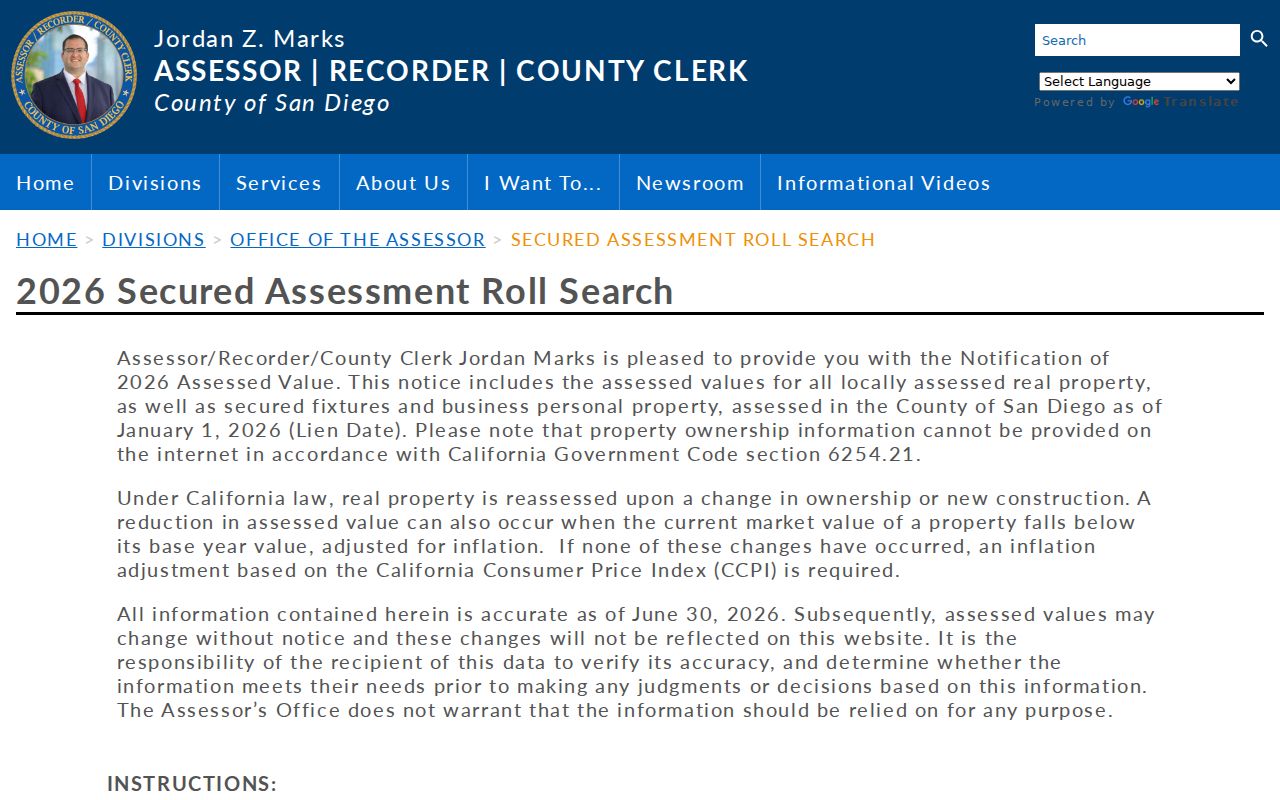
The image anchors the local search path to the assessor's public instructions. Owner or mailing information may be suppressed online, so a counter or lawful request can still be needed.
Three-Record San Marcos Directory Check
A strong San Marcos residents directory result uses three different record roles. First, the parcel or assessment roll ties a street address to an APN and a legal description. Second, the ARCC index ties parties to recorded instruments. Third, a court, voter, vital, directory, or obituary source supplies a different kind of identity clue. The three sources do not all describe the same thing, which is why agreement is useful and disagreement is a signal to slow down.
For example, a deed may show a grantor, grantee, recording date, document type, book and page, and legal description. A court result may show the case title, parties, case number, location, type, and filing date. A voter-status result is an identity-gated personal check, not a browsable roll. A library directory may show an occupant, spouse, address, or telephone clue for a past year. Keep ownership, legal party, registration status, and occupancy in separate columns.
- Roll
- An organized record set, such as the assessment roll or an approved voter file, kept for a defined public purpose.
- Index
- A finding aid with names or numbers. It may point to an image or file without displaying the full record.
- Parcel
- A mapped piece of land identified by an APN and legal description; it is not a list of the people who live there.
- Criss-cross directory
- An address-first directory section that reverses the usual name-first lookup, when a local volume contains one.
That vocabulary makes the San Marcos residents directory more precise. “Owner,” “registered voter,” “party,” “occupant,” and “relative” are different claims with different custodians.
Current San Marcos Resident Directories
No single current directory covers San Marcos residents. The useful sources are narrower rolls that answer different questions. The table below keeps those boundaries visible.
| Source | What It Can Add | Keeper | Access |
|---|---|---|---|
| Assessment and parcel records | APN, situs, owner or mailing clue, value and property traits | San Diego County Assessor / GIS | Address, parcel, counter, or request |
| Recorded-document index | Deed parties, liens, releases, maps, dates and legal descriptions | ARCC Recorder | Free index; copies by kiosk, order, or mail |
| Voter status and approved file | Personal registration status or approved-purpose geography | California SOS / Registrar | Identity check or written application |
| City-created records | Permits, inspections, agendas, contracts and city correspondence | San Marcos | Online systems or CPRA request |
| Business and license indexes | Public affiliation, entity, agent, license status and public contact | California SOS, DCA, City, ARCC | Free searches; some copies cost |
Business and professional records can help reconnect a person to a public role, but an entity address or license address is not proof of a home address. For a person-centered chain, the San Marcos resident lookup page keeps the court, vital, and identity-anchor workflow separate from this broad directory map.
The county custody roster is a separate, current-status source. The San Diego County Sheriff's Who's In Jail search can show a current or recent custody clue, but it is not a resident directory and does not prove a conviction or home address.
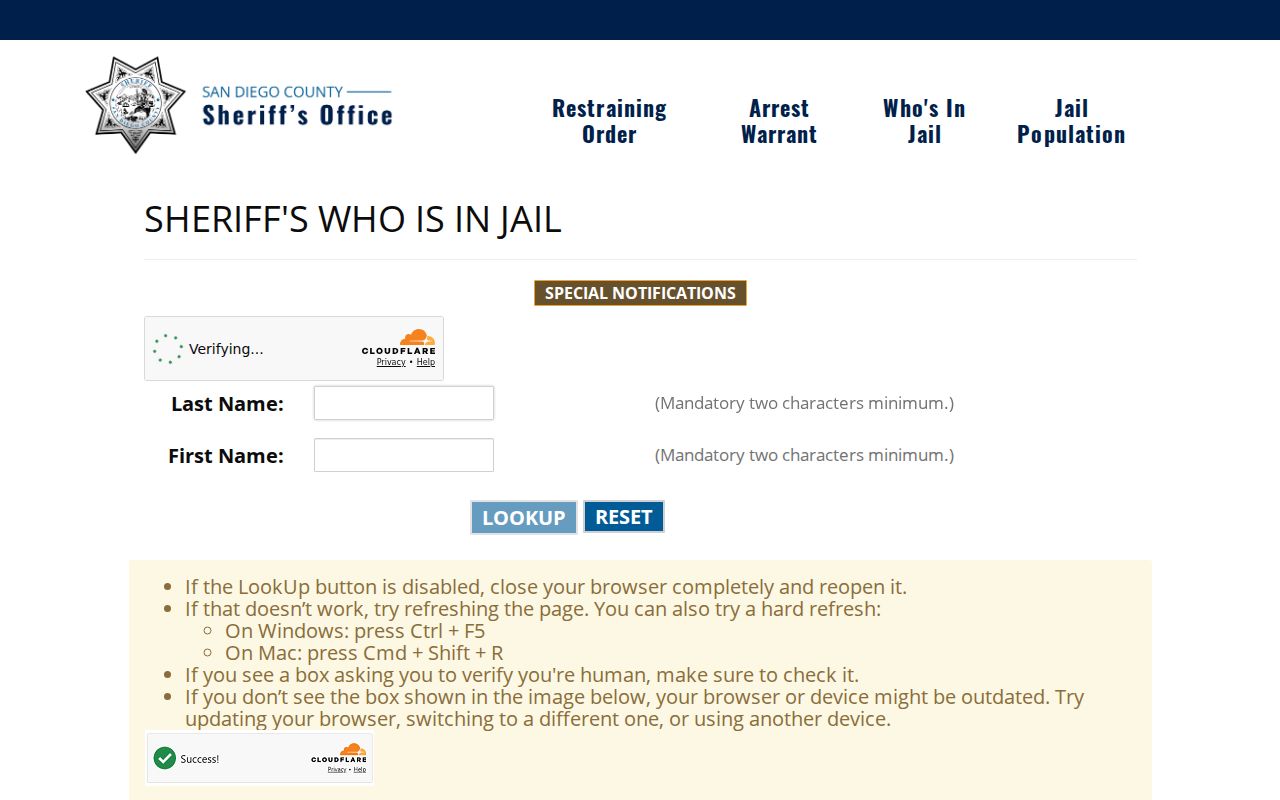
Keep custody information in its own category, apart from parcel, voter, court, and historical household evidence.
San Marcos Resident Directory Limits
My Voter Status asks for identity facts such as first name, last name, date of birth, county, and a California driver-license or state-ID detail or other matching data. It can return a registrant's status, party preference, precinct or district information, and voting tools. A failed match can reflect a spelling difference, a recent update, or a county mismatch. It does not prove that a person has never lived in San Marcos.
California voter data is purpose-limited under Elections Code sections 2188 and 2194. A written file application through the San Diego Registrar of Voters must state a permitted election, scholarly, journalistic, political, or governmental purpose. The published county application describes a one-time registered-voter file priced at $75 and a listed vote-by-mail activity subscription priced at $285, both subject to current-form checks. Driver-license or state-ID numbers, Social Security numbers, signatures, and confidential-voter data stay withheld.
That is a vital difference between a personal status check and a public residents directory. Safe at Home participants can register confidentially, and an approved extract cannot lawfully be republished as a casual neighborhood list.
The California voter-status form is an identity-gated source rather than an open roll.
Use the result as one identity clue and then verify the relevant fact with the office that owns it.
San Marcos Resident Court Leads
The San Diego Superior Court Index provides Party Name, Case Number, and DA Number modes. Party mode uses a last name and works best with a first or middle name, case type, and court location. The index generally reaches back to 1974, while older Central Division indexes run from 1880 to mid-1974 in bound or computer-generated books. Juvenile matters, traffic and minor-offense records, many pre-1974 cases, and some short-retention files are outside the online search.
A result can show a case title, number, filing date, type, location, party names, and roles. That is a lead. It does not supply criminal charges or disposition. A Register of Actions or the clerk file may add docket events, hearing dates, disposition, and document-order options. Civil, small-claims, and probate cases begun on or after January 1, 2008 may have purchasable documents, while some imaged family documents can be ordered online. Criminal documents are not available for online download.
The official San Diego court index entry point is the source behind the local search path.
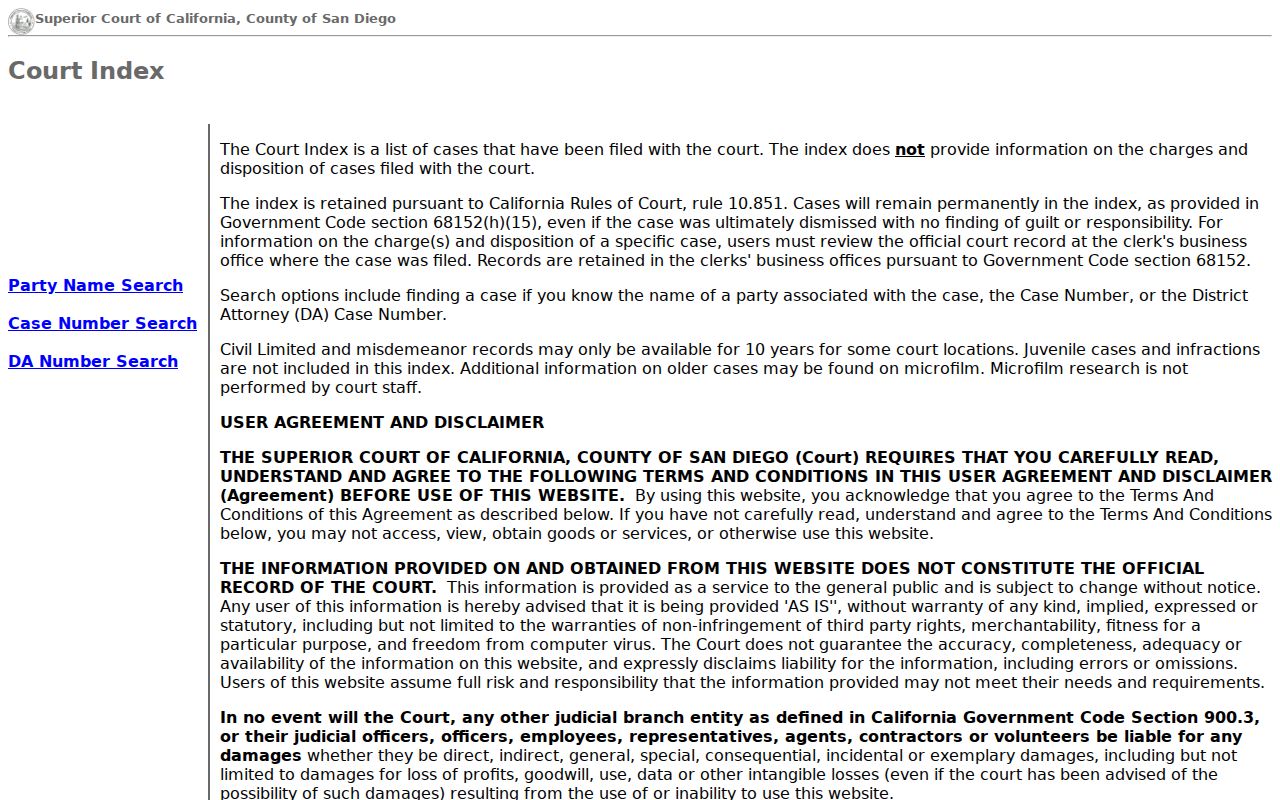
Use party role, case type, location, and chronology to avoid treating a same-name party as the right San Marcos person.
San Marcos Vital Record Paths
San Diego County and CDPH divide custody by event and service. The county Recorder handles county birth, death, and public-marriage copies, while the local registrar handles recent registration work. CDPH-Vital Records supplies statewide forms and records. Confidential marriage copies are limited under Family Code section 509. Divorce decrees come from Superior Court; CDPH provides a certificate of record for dissolutions from 1962 through June 1984. Adoption and original amended birth records remain sealed unless a statute or court order allows access.
Most people may order an informational copy of a non-confidential birth, death, or public-marriage record. An authorized certified copy is different. It is limited to listed statutory relationships or other qualifying roles, and a mailed authorized request needs a notarized sworn statement. The 2026 CDPH fees are $31 for birth, $26 for death, $19 for marriage, and $18 for a dissolution certificate. San Diego County lists local fees of $34 for birth, $26 for death, and $19 for public marriage, with a $12.95 online handling charge through its designated vendor.
Vital records can confirm an event, relationship, or date. They do not create a broad name browser for the San Marcos residents directory.
County responsibilities begin with the San Diego County ARCC service page. For state custody, compare CDPH's Vital Records overview, county registrars and recorders guidance, and current fee schedule before choosing a form or office.
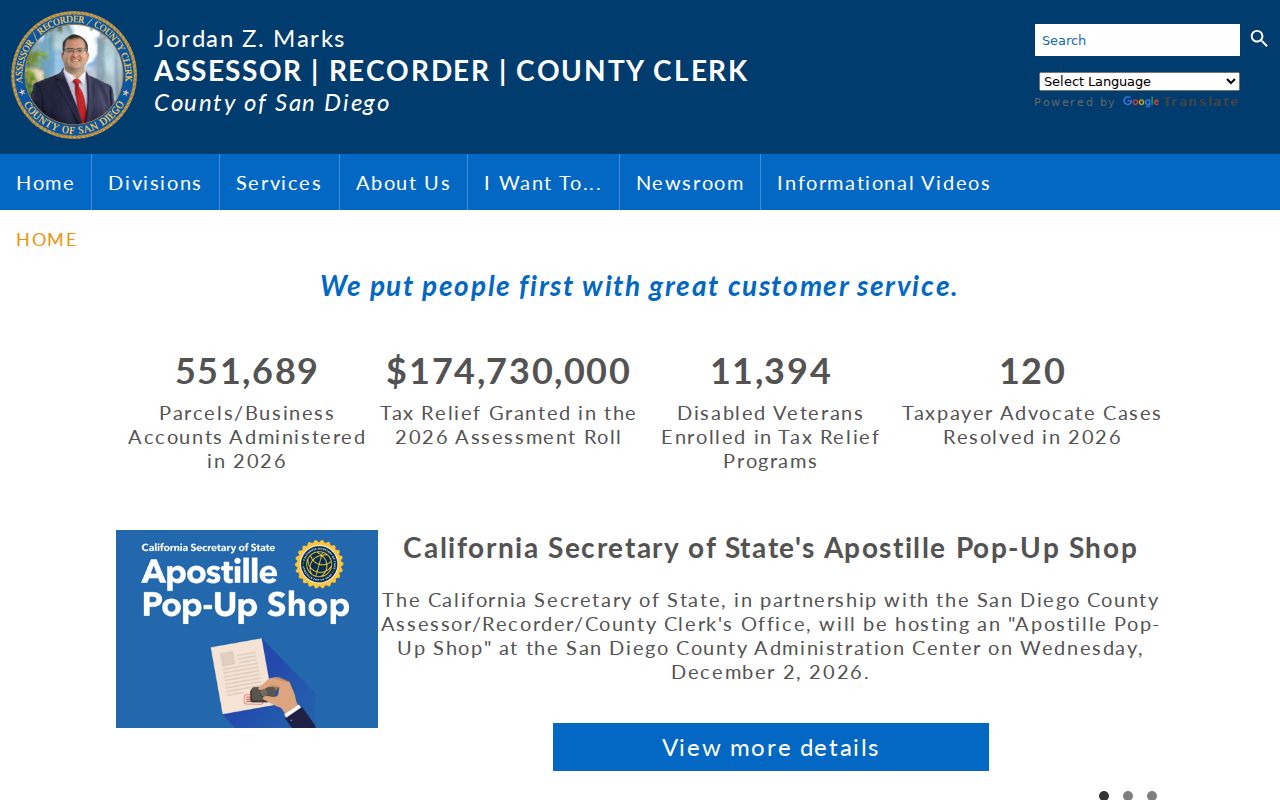
The ARCC service path helps separate a county copy request from a state form or a court-file request.
San Marcos Records Requests
When a city permit, inspection file, contract, meeting packet, or other existing San Marcos record is not exposed online, use the JustFOIA public-records portal, email Cityclerk@sanmarcosca.gov, call (760) 744-1050 ext. 3186, or write to the City Clerk at 1 Civic Center Drive, San Marcos, CA 92069. Name the department, record type, address or APN, and date range. The city says it will contact the requester when locate, compilation, or review takes longer than the ordinary determination window.
Under the California Public Records Act, Government Code sections 7920.000 through 7931.000, an agency ordinarily makes a disclosure determination within ten days under section 7922.535. An unusual-circumstance extension can add up to fourteen days. Inspection is generally free, while direct duplication costs may be charged. The agency need not create a new list or answer a question by compiling a household from unrelated files.
A focused request is more useful than “everything about this person.” Ask for an existing permit file, a dated agenda packet, a named contract, or an address-specific inspection record. Redactions may protect personal details, active investigations, victims, or other exempt material.
A San Marcos residents directory question becomes answerable when the request names an existing file and leaves the custodian's record boundary intact.
Historical San Marcos Resident Directories
San Marcos incorporated in 1963, so older records often sit in county and regional collections rather than a city clerk shelf. A verified local collection is the CSUSM University Archives run of institutional directories from 1989 through 2021. The collection includes telephone, academic-year, interim, and unit editions, with digital surrogates available by request for some 1989-2000 and selected unit years. It describes campus affiliation, not a residential city directory. The San Marcos city directory collections page explains how to use that distinction with regional volumes.
San Diego Public Library Special Collections lists city-directory holdings from 1886 through 2021, with selected digital San Diego and suburban volumes. A 1956 R.L. Polk suburban volume named several neighboring cities but did not establish San Marcos coverage. Catalog leads for “Escondido, San Marcos, and Valley Center City Directory” in 1979 and 1986 still need scan and title-page confirmation. Do not turn an unverified catalog lead into a claimed year run.
For an older household, pair a directory or telephone volume with the 1950 public census, ARCC deed and assessment material, newspapers, obituaries, yearbooks, and probate. The historical shelf is a bridge between names and addresses, not a complete list of everyone who lived in the valley.
CSUSM Archives preserves the institutional record behind one local directory collection. The CSUSM Library is the public starting point for its catalog and research access.
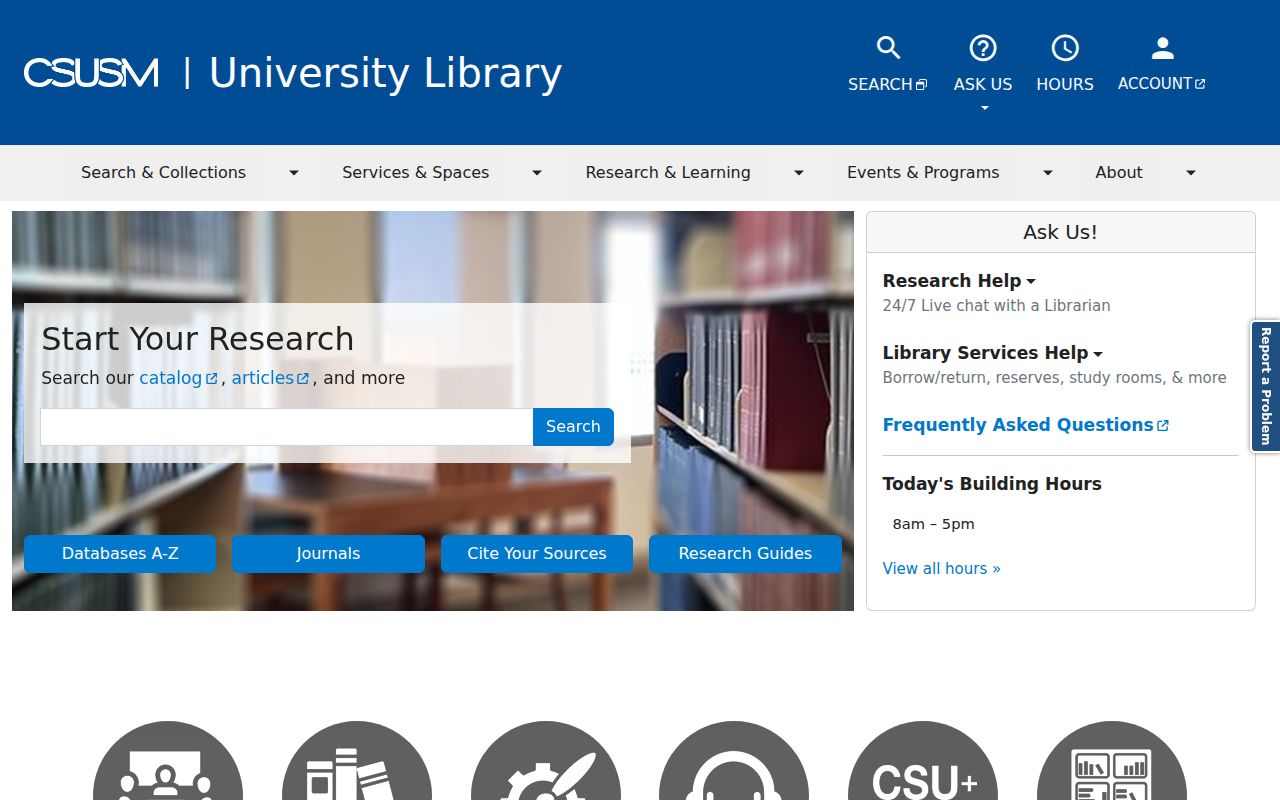
The collection's noncirculating, appointment-based access makes a title-page check part of sound genealogy work.
San Marcos Recorder Cutoff
ARCC's web Official Records Index starts in 1970 and updates daily, but the County Archives holds deeds from 1846 through 1969, numeric indexes from 1872 through 1973, and recorded maps. Official Records overlap from 1931 through 1989, which can help bridge a web result to a bound or archived source. A recent document may take 24 to 48 hours to appear online. Older deed work may require Archives staff, a kiosk, a bound index, microfilm, or a copy request.
APN searching is the local records quirk that changed the workflow. Assembly Bill 1785 ended online APN searches on December 9, 2024, but APN searches remain available at public kiosks in ARCC offices. Name, document, date, and book-page searches still have online or archive paths. A deed image is not free merely because the index is free: kiosk viewing is distinct from a mailed or ordered copy.
The county archive collection gives the San Marcos residents directory a much longer time line than one web form. It is especially useful when a street was described by a subdivision, lot, ranch, or legal description before later city streets took shape.
San Marcos Protected Addresses
California records are not all open in the same way. Safe at Home gives qualifying survivors and certain public employees a substitute address, confidential voter registration, and mail forwarding. Government Code sections 6205 and following, and sections 6215 and following, govern the program. Property bought in a participant's own name can still expose a legal description, so the program is not a promise that every property trace disappears.
Voter records have purpose limits. DMV personal data is restricted under the federal Driver's Privacy Protection Act. Court files can be sealed or redacted. Adoption and confidential-marriage records use their own rules. A public record that can be inspected for one purpose is not permission to assemble a private profile or publish a neighbor list.
Lawful personal use. Use San Marcos record sources for family history, civic research, reconnecting, property curiosity, and other lawful aims. Never use a name or address trail to stalk, harass, intimidate, or harm anyone.
San Marcos Record History Has Layers
San Diego County dates to 1850, while San Marcos incorporated in 1963. The valley's older evidence therefore starts with county deeds, rancho and subdivision maps, probate, court books, census schedules, newspapers, and regional directories. Local chronology matters: the town center moved toward the railroad in 1903, rural mail and telephone service followed by 1905, and city administrative files begin after incorporation. An address from before that line may be described by a ranch, tract, lot, or legal parcel instead of a city street.
Today, neighborhoods and institutional places carry their own record clues. Twin Oaks Valley, Richmar and central San Marcos, Lake San Marcos, San Elijo Hills, Discovery Hills, Santa Fe Hills, the University District, and Old Creek Ranch do not all share the same development era. Older central parcels may benefit from census and county books. Later master-planned areas may be better dated through tract maps, planning packets, permits, and assessment history. ZIP 92096 marks CSUSM's institutional geography, not a normal residential roll.
The county's free Owner Alert can monitor up to ten names and ten APNs per email and link a future recording to the index. It does not inspect the document or prove that a person occupies the parcel. That small service captures the local theme: the best San Marcos residents directory work is a set of carefully labeled clues, each checked at its source.