
Finding San Marcos Residents
Start with one narrow question. A parcel check, a former-owner trace, a court index lead, or a lawful way to reconnect with a person each calls for a different record. County property rolls can pin down a parcel. They may also surface an ownership clue. A deed can connect parties across time. A court index shows a case lead without opening the whole file, and a library city directory can place a household in an earlier year. No single clue proves who lives there now. When the only clue is a name or address, use this starter order:
- Write down every known spelling, middle initial, former surname, street form, ZIP code, and date range.
- Use San Diego County GIS or the assessor's address search to locate the parcel and APN.
- Use the ARCC Official Records Index for a party name, document number, date range, or older archive path.
- Check the San Diego Superior Court index for a matching party, case type, location, and filing period.
- Close the gap with a library source, vital-record request, probate file, obituary, or focused CPRA request.
A chain of clues is the honest result. No public roll lists every member of a household, so keep the source, date, and limits beside each fact you gather for the San Marcos residents directory.
San Marcos Resident Records Offices
San Marcos is an incorporated city. It is not a separate recording district, though, and it runs no municipal court. Durable land, court, voter, and vital records sit mostly at the San Diego County or California level. City Hall keeps city-made records. Agendas, permits, contracts, ordinances, and administrative files belong there. Settle this custody split before any resident search begins.
ARCC Recorder and Assessor
San Diego County Assessor/Recorder/County Clerk keeps the assessment roll, deeds, liens, maps, marriage records, and fictitious business name files.
(619) 238-8158
(619) 237-0502
ARCC assessor, recorder, and clerk services
San Diego Superior Court
The county court index covers civil, criminal, family, mental-health, and probate case leads, with older and sealed-record limits.
County court index and file access rules
San Marcos City Clerk
The City Clerk handles city-created records and CPRA routing. Requests should name an existing record, date range, department, address, or permit number.
(760) 744-1050 ext. 3186
City request portal
Some records belong to the state. The California Secretary of State, CDPH-Vital Records, and the Department of Consumer Affairs are the named custodians there. The California Public Records Act is a request path for an existing, identifiable record. It never makes a city create a household list.
San Marcos Residents Start with Parcels
San Marcos parcel research begins with the San Diego County Secured Assessment Roll Search, which offers three modes: Parcel Number, Address, and Street Name. Address mode wants the street number and name only. Leave out the direction, street type, and city. Parcel-number mode requires the county's APN format. Street Name mode is the flexible one. It works without a street number, so you can pull a whole road or chase an older lot when that is your only clue.
A typical result carries an APN, situs address, legal description, tax-rate area, and assessed land and improvement values, plus exemption flags, property traits, and a mailing destination that may be suppressed. Renters and household members do not appear. The county's GIS layers add parcel shape, subdivision, jurisdiction, zoning, and related maps. Use those as geographic anchors for the San Marcos residents directory. They are not a household roll, and treating them as one leads nowhere.
| Parcel Number | County APN key; use the format requested by the search form. |
|---|---|
| Address | Street number and name; omit direction, type, and city when the tool instructs. |
| Street Name | Whole-street mode for parcels that lack a normal street number. |
| Roll context | Values reflect the January 1, 2026 lien date and were stated as current through June 30, 2026. |
The GIS layer linked to the county roll can display an APN and a legal description. It also shows document date, acreage, subdivision, situs ZIP, jurisdiction, street, unit, building, and physical traits. One thing is missing. There is no owner-name or owner-mailing field anywhere on the map. That gap matters for a street-by-street workflow. A parcel map is easy to mistake for a people list. It is really just land records with lines drawn around them.
San Marcos property search screen: the county's secured-roll instructions show the three modes. Their address fields appear there too.
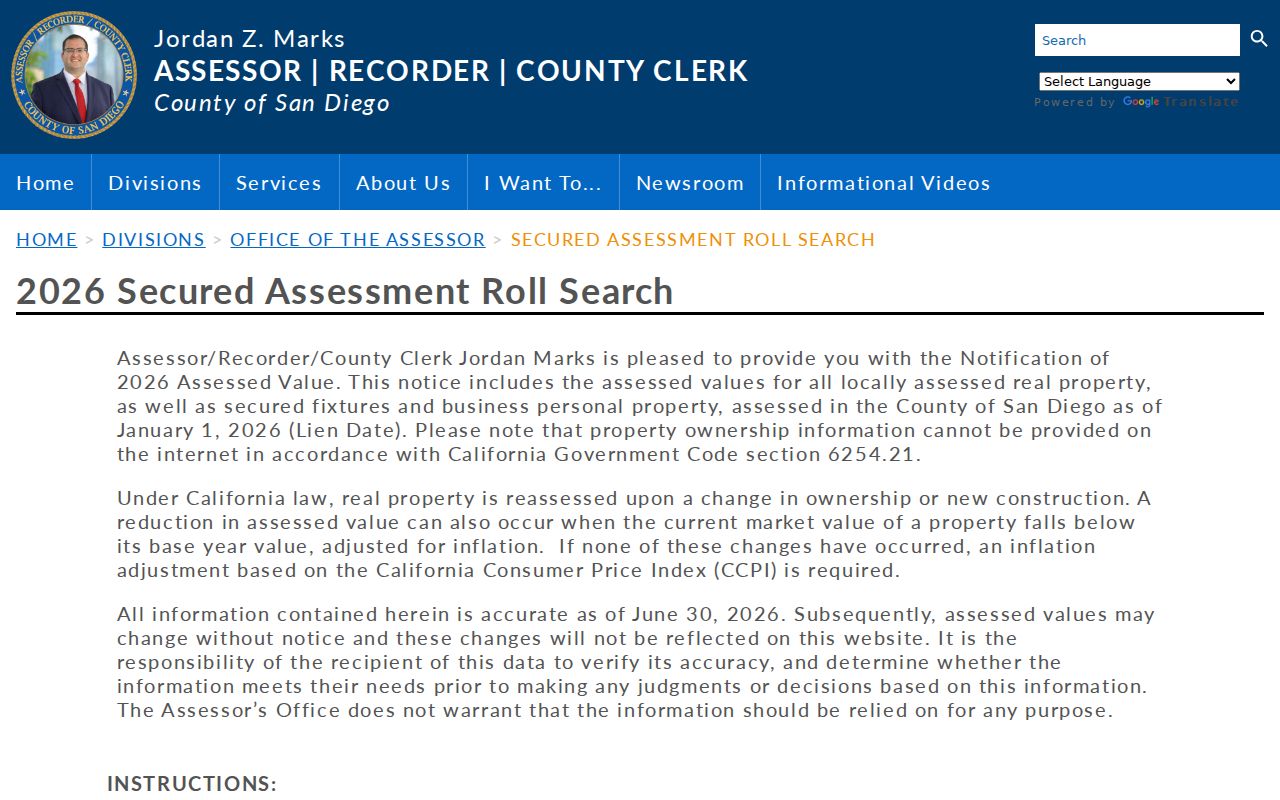
The image anchors the local search path to the assessor's public instructions. Owner or mailing information may be suppressed online, so a counter visit or a lawful request can still be needed for those details.
Three-Record San Marcos Directory Check
A strong San Marcos residents directory result draws on three different record roles. First, the parcel or assessment roll ties a street address to an APN. It also gives a legal description. Second, the ARCC index ties parties to recorded instruments. Third, a court, voter, vital, directory, or obituary source adds a different kind of identity clue. These records do not all describe the same thing. Agreement across them is useful. Disagreement is a signal to slow down before you trust any single column.
Consider what each source actually shows. A deed may list a grantor, grantee, recording date, document type, book and page, and legal description. A court result may give the case title, parties, case number, location, type, and filing date. Voter status works differently. It is an identity-gated personal check, not a browsable roll. A library directory may show an occupant, spouse, address, or telephone clue for a past year. That is where past residents surface. Keep ownership, legal party, registration status, and occupancy in separate columns.
- Roll
- An organized record set, such as the assessment roll or an approved voter file, kept for a defined public purpose.
- Index
- A finding aid with names or numbers. It may point to an image or file without displaying the full record.
- Parcel
- A mapped piece of land identified by an APN and legal description; it is not a list of the people who live there.
- Criss-cross directory
- An address-first directory section that reverses the usual name-first lookup, when a local volume contains one.
Those labels give a San Marcos residents directory its precision. An owner, a registered voter, and an occupant are distinct claims, and each rests with a different custodian.
Current San Marcos Resident Directories
No single current directory covers San Marcos residents. The useful records are narrower rolls, each answering a different question. The table keeps those boundaries in view.
| Source | What It Can Add | Keeper | Access |
|---|---|---|---|
| Assessment and parcel records | APN, situs, owner or mailing clue, value and property traits | San Diego County Assessor / GIS | Address, parcel, counter, or request |
| Recorded-document index | Deed parties, liens, releases, maps, dates and legal descriptions | ARCC Recorder | Free index; copies by kiosk, order, or mail |
| Voter status and approved file | Personal registration status or approved-purpose geography | California SOS / Registrar | Identity check or written application |
| City-created records | Permits, inspections, agendas, contracts and city correspondence | San Marcos | Online systems or CPRA request |
| Business and license indexes | Public affiliation, entity, agent, license status and public contact | California SOS, DCA, City, ARCC | Free searches; some copies cost |
Licensing and business filings can tie a name to a public role. That helps, but an entity address proves nothing about where someone lives. For a person-centered trail, the San Marcos resident lookup page keeps court, vital, and identity steps apart. That separation keeps this broad directory map clean.
Custody status is its own category of current record. The San Diego County Sheriff's Who's In Jail search may surface someone in custody. That could mean now or lately. Still, it is not a residents directory. It proves neither a conviction nor a home address in San Marcos.
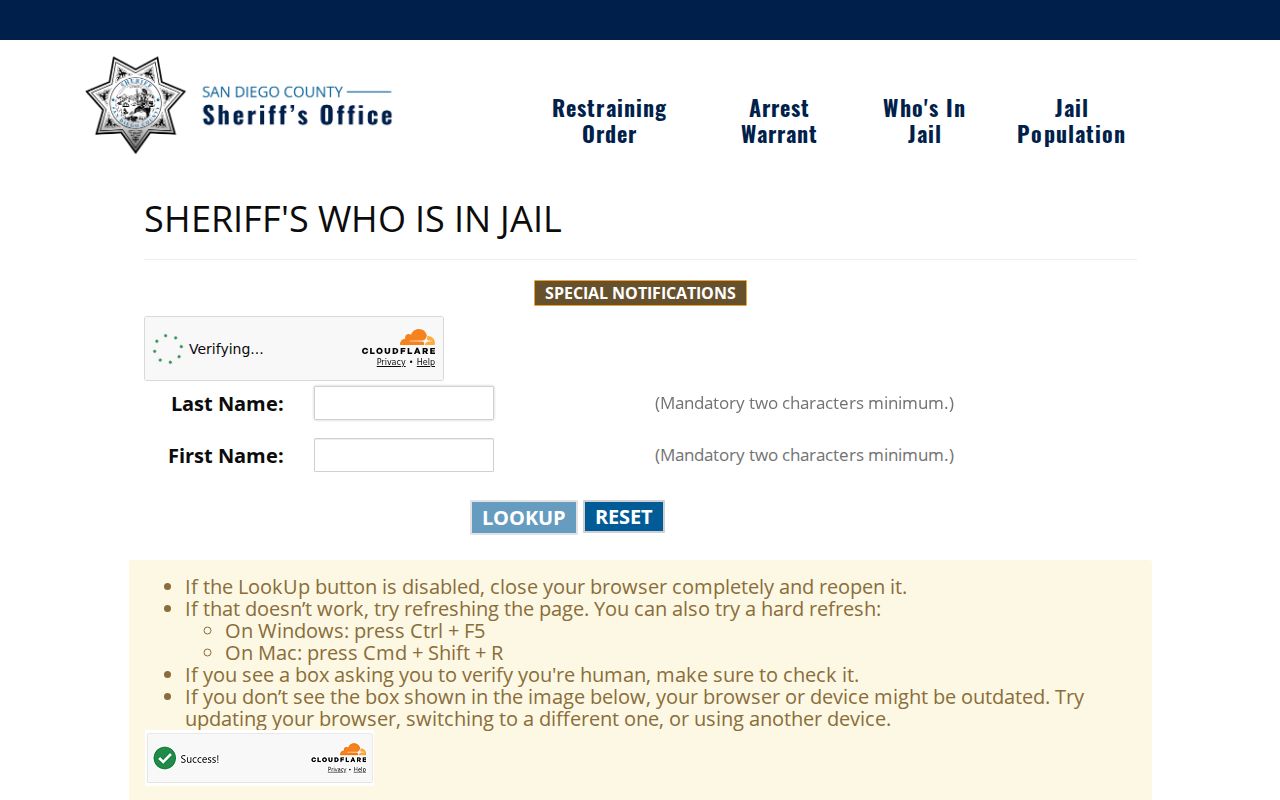
Keep custody clues separate from parcel rolls, voter rolls, court files, and old household records.
San Marcos Resident Directory Limits
My Voter Status is an identity-gated tool. It asks for a first name, last name, birth date, county, and a driver-license or state-ID detail or other matching data. A good match returns registrant status, party preference, and precinct or district facts. A failed match can stem from a spelling slip. It can also stem from a recent update or a county mismatch. It never proves a person has not lived in San Marcos.
The statewide voter file is purpose-limited. Elections Code sections 2188 and 2194 govern its use. A written application through the San Diego Registrar of Voters must state an election, scholarly, journalistic, political, or governmental purpose. The county's published application lists a one-time registered-voter file at $75. It also lists a vote-by-mail activity subscription at $285. Both are subject to current-form checks. Driver-license and state-ID numbers, Social Security numbers, signatures, and confidential-voter data stay withheld.
A personal status check and a public residents directory are different things. Safe at Home participants can register confidentially. An approved extract cannot lawfully be republished as a casual neighborhood list for San Marcos.
The California voter-status form remains an identity-gated source, not an open roll.
Treat any result as one identity clue. Then confirm the fact with the office that owns the record.
San Marcos Resident Court Leads
The San Diego Superior Court Index offers three modes. They are Party Name, Case Number, and DA Number. Party mode runs on a last name alone. It works best with a first or middle name. A case type and a court location help too. The index generally reaches back to 1974. Older Central Division indexes cover 1880 through mid-1974 in bound or computer-generated books. Juvenile matters and traffic and minor-offense files sit outside the online search. So do many pre-1974 cases and some short-retention records.
A hit shows a case title, number, filing date, type, and location. Party names come with roles. Treat it as a lead. Charges and dispositions are not there. A Register of Actions or the clerk file may add docket events and hearing dates. Disposition and document-order options can appear there too. Civil, small-claims, and probate cases can have purchasable documents. The cutoff is filings on or after January 1, 2008. Some imaged family documents can be ordered online. Criminal documents cannot be downloaded.
The official San Diego court index entry point anchors the local search path.
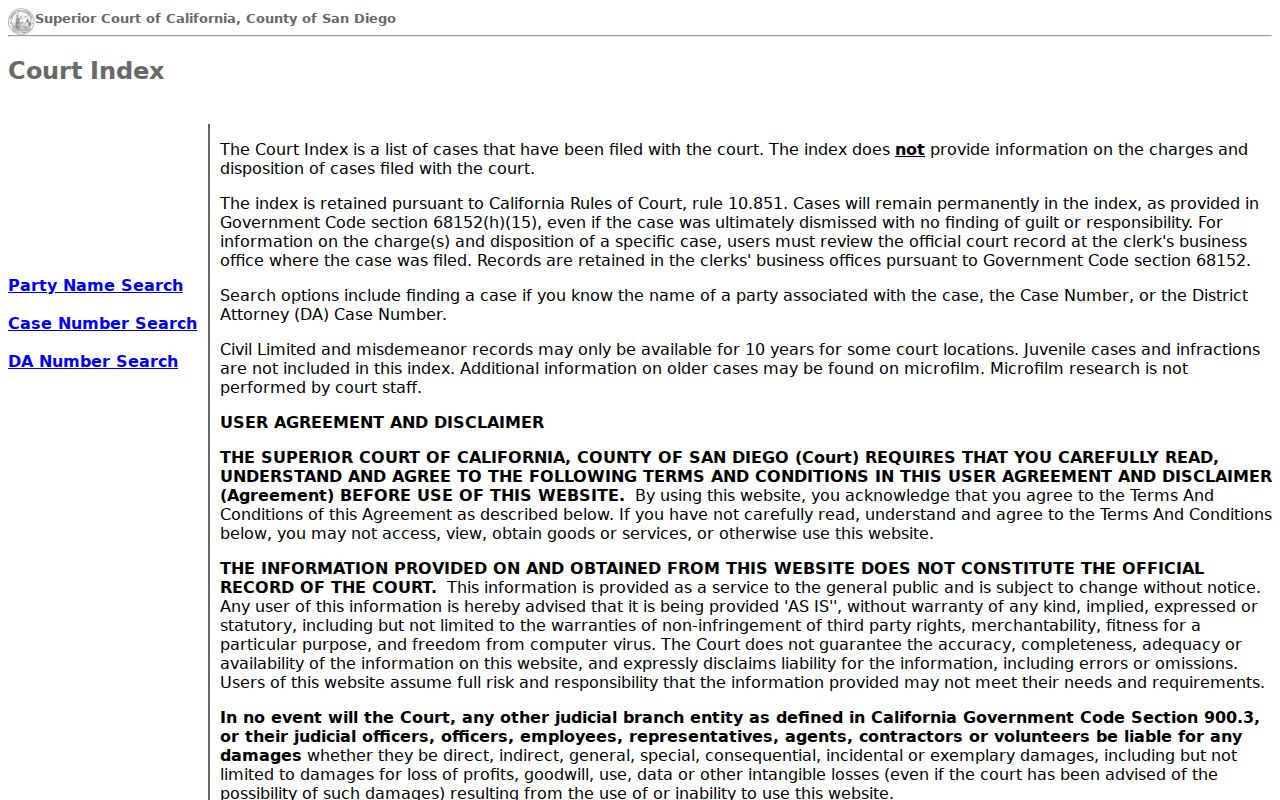
Same-name parties are common. Weigh party role, case type, location, and dates before crediting a hit as the right San Marcos resident.
San Marcos Vital Record Paths
Vital records in San Diego County and statewide split by event and service. The county Recorder issues county birth, death, and public-marriage copies. The local registrar handles recent registration work. CDPH-Vital Records supplies statewide forms and records. Confidential marriage copies stay limited under Family Code section 509. Superior Court holds divorce decrees. CDPH offers a certificate of record for dissolutions from 1962 through June 1984. Adoption and original amended birth records stay sealed unless a statute or court order opens them.
Anyone may order an informational copy of a non-confidential birth, death, or public-marriage record. An authorized certified copy works differently. It is limited to listed statutory relationships or other qualifying roles. A mailed authorized request needs a notarized sworn statement. The 2026 CDPH fees run $31 for birth. Death copies cost $26, marriage $19, and a dissolution certificate $18. San Diego County lists $34 for birth, $26 for death, and $19 for public marriage. Its designated vendor adds a $12.95 online handling charge.
These records confirm an event, a relationship, or a date. They are not a name browser for the San Marcos residents directory.
County work starts with the San Diego County ARCC service page. For state custody, compare CDPH's Vital Records overview, county registrars and recorders guidance, and current fee schedule before picking a form or office.
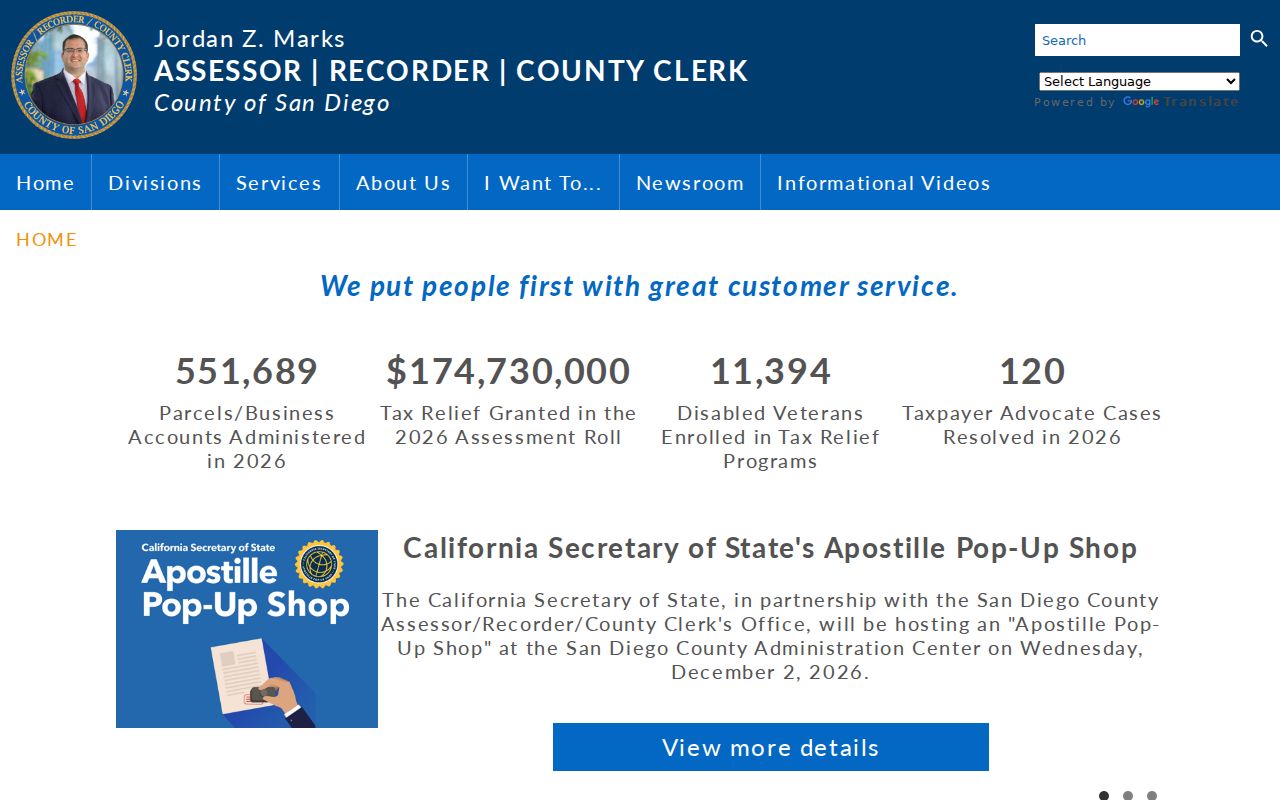
The ARCC service path separates a county copy request from a state form or a court-file request.
San Marcos Records Requests
Not every San Marcos record sits on a website. Permits, inspection files, contracts, and meeting packets may live only in a department's files. The city routes those requests through the JustFOIA public-records portal. You can also email Cityclerk@sanmarcosca.gov, phone at (760) 744-1050 ext. 3186, or mail the City Clerk at 1 Civic Center Drive, San Marcos, CA 92069. Name the department, record type, address or APN, and date range. If locating and compiling the files runs long, the city promises to notify the requester.
The California Public Records Act sets the clock. Government Code sections 7920.000 through 7931.000 generally require a disclosure decision within ten days. That deadline sits in section 7922.535. Unusual circumstances can add fourteen days. Inspection is usually free. Duplication may cost extra. The city also has no duty to build a new list. Nor must it merge unrelated files into a household answer.
Specific beats sweeping. A dated agenda packet or a named contract gives the custodian something real to pull. An address-specific inspection record works the same way. "Everything about this person" usually stalls. Expect redactions for personal details, active investigations, or victim information.
A San Marcos residents directory question works best when it names an existing file. It should also respect the custodian's record boundaries.
Historical San Marcos Resident Directories
San Marcos incorporated in 1963, and older houses predate the city itself, so the oldest household traces usually live in county and regional collections instead of a city clerk shelf. The CSUSM University Archives holds a verified run of institutional directories covering 1989 through 2021. That run spans telephone, academic-year, interim, and unit editions. Digital surrogates exist for some 1989-2000 volumes and selected unit years. Note the limitation. These volumes describe campus affiliation. They are not a residential city directory. The distinction matters. A guide to San Marcos city directory collections shows how to apply it with regional volumes.
The San Diego Public Library Special Collections lists city-directory holdings from 1886 through 2021, with selected digital San Diego and suburban volumes. A 1956 R.L. Polk suburban volume named several neighboring cities but never established San Marcos coverage. Catalog leads for "Escondido, San Marcos, and Valley Center City Directory" from 1979 and 1986 still await scan and title-page confirmation. Treat them as leads, not years.
For an older household, pair a directory or telephone volume with the 1950 census, ARCC deed and assessment material, newspapers, obituaries, yearbooks, and probate. The historical shelf bridges names and addresses. It is not a census. Not everyone in the valley appears.
The CSUSM Archives preserves the institutional record behind one local directory collection. Its catalog and research access start at the CSUSM Library.
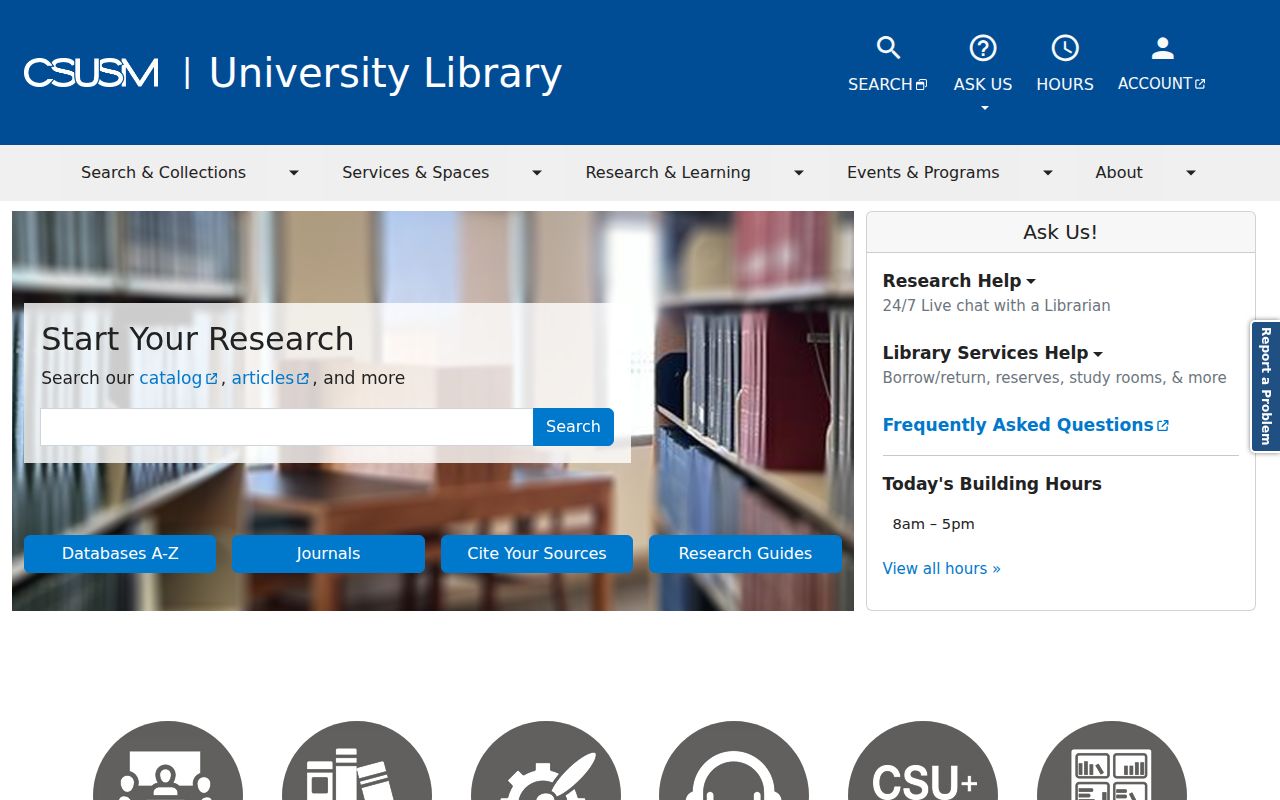
The collection's noncirculating, appointment-based access makes a title-page check part of sound genealogy work.
San Marcos Recorder Cutoff
ARCC's web Official Records Index starts in 1970 and refreshes daily. The County Archives reaches further back. Its shelves hold deeds from 1846 through 1969 and numeric indexes from 1872 through 1973. They also hold recorded maps. Official Records overlap from 1931 through 1989. That helps bridge a web result to a bound or archived source. Fresh recordings take 24 to 48 hours to appear online. Deeper deed work may call for Archives staff, a kiosk, or a bound index. It may also call for microfilm or a copy request.
One local quirk reshaped the workflow. Assembly Bill 1785 shut off online APN searches on December 9, 2024. Kiosks inside ARCC offices still run them. Name, document, date, and book-page searches keep their online and archive paths. Free does not travel far here. The index is free. A deed image ordered by mail is not. Kiosk viewing and ordered copies are separate transactions.
The archive stretch gives a San Marcos residents directory a far longer time line. That reach beats any single web form. It earns its keep when an old street was described by subdivision, lot, ranch, or legal description. That was before modern city streets took shape.
San Marcos Protected Addresses
California openness has limits. Safe at Home gives qualifying survivors and certain public employees a substitute address. Confidential voter registration and mail forwarding come with it. Government Code sections 6205 and following, and 6215 and following, govern the program. Buying property in one's own name can still expose a legal description. The program is not a promise that every property trace vanishes.
Voter records carry purpose limits. The federal Driver's Privacy Protection Act restricts DMV personal data. Courts can seal or redact files. Adoption and confidential-marriage records follow their own rules. Inspecting a public record for one purpose is not permission to assemble a private profile. Nor is it permission to publish a neighbor list.
Lawful personal use. Use San Marcos record sources for family history, civic research, reconnecting, property curiosity, and other lawful aims. Never use a name or address trail to stalk, harass, intimidate, or harm anyone.
San Marcos Record History Has Layers
Layers matter here. San Diego County organized in 1850. San Marcos did not incorporate until 1963. The deepest paper trail therefore sits in county hands. Deeds, rancho and subdivision maps, probate files, and court books hold early evidence. Census schedules, newspapers, and regional directories hold the rest of the valley's earliest records. Timing shapes the search. The town center shifted toward the railroad in 1903, and rural mail and telephone service arrived by 1905. City administrative files only begin after incorporation. A pre-1963 address may instead appear as a ranch, tract, lot, or legal parcel rather than a city street.
Neighborhoods add their own clues. Twin Oaks Valley, Richmar, central San Marcos, Lake San Marcos, San Elijo Hills, Discovery Hills, Santa Fe Hills, and the University District developed in different eras. So did Old Creek Ranch. Older central parcels often trace best through census pages and county books. Newer master-planned tracts usually yield to tract maps, planning packets, permits, and assessment history instead. ZIP 92096 marks CSUSM's institutional geography rather than an ordinary residential roll.
One free county service, Owner Alert, watches up to ten names and ten APNs per email. It links any new recording back to the index. It cannot read the document for you, and it proves nothing about who actually occupies the parcel. That limitation is the theme in miniature. Good San Marcos residents directory work means a stack of clearly labeled clues. Verify each one at its source.